
Quick Summary
Deciding between aeroseal vs manual duct sealing is essential for property owners seeking to lower energy bills, as manual mastic sealing targets visible duct joints while pressurized Aeroseal technology seals hidden leaks from the inside out. As a premier local specialist, Premier Air Duct Solutions Woodland Hills is uniquely positioned to help you weigh these methods and execute the ideal sealing strategy for your specific HVAC system's layout. To optimize your home's airflow and stop energy waste, schedule a professional duct inspection today to receive a free, upfront estimate for expert duct sealing services.
Aeroseal vs Manual Duct Sealing: Which Is Best for Your Home and Energy Bills?
If you are trying to choose between aeroseal vs manual duct sealing to lower your energy bills, you are likely dealing with uneven temperatures, dusty rooms, or high utility bills. In the hot summers of Woodland Hills and the surrounding San Fernando Valley, an inefficient HVAC system can quickly drive up your monthly expenses. Both sealing methods can reduce duct leakage substantially, but they work in very different ways.
Many homeowners in our local area (including Calabasas, Encino, and Topanga) struggle with dust and poor airflow because of failing duct tape or aging, cracked duct joints. While manual sealing with mastic paste is highly effective for visible ducts, it cannot reach the hidden runs behind your drywall. Combining manual work for large, exposed gaps with aerosol sealing technology can close 70% to 90% of all system leaks. Premier Air Duct Solutions Woodland Hills offers professional duct inspections and upfront estimates to help you find the right approach for your property’s layout.[1] See also Air Duct Cleaning in Woodland Hills: Breathe Easier, Pay Less.
Aeroseal vs Manual Duct Sealing – The Quick Answer
The primary difference between Aeroseal and manual duct sealing comes down to physical access. Manual duct sealing involves a technician applying mastic paste or specialized foil tape to the outside of visible, exposed duct joints. Aeroseal, on the other hand, uses a pressurized machine to blow aerosolized adhesive particles through the inside of the ductwork, sealing hidden leaks behind walls, ceilings, and tight attic spaces that manual tools simply cannot reach.
Choosing the best way to seal air ducts depends on where your system is losing air. If your home has a simple, fully exposed duct system in an open attic or garage, manual mastic sealing is a highly cost-effective choice. However, if your ductwork is buried inside walls or located in tight crawlspaces, combining both types of duct sealing methods is the most reliable way to achieve a complete seal and lower your utility bills.
Key Differences at a Glance
To help you compare your options, we have consolidated the key differences between these two primary duct sealing methods into a single reference table:
| Feature | Manual Mastic Sealing | Aeroseal Sealing |
|---|---|---|
| Application Method | Mastic paste or foil tape applied by hand to the duct exterior. | Pressurized adhesive mist blown through the inside of the system. |
| System Reach | Limited strictly to visible, physically accessible ductwork. | Reaches all hidden, buried, and hard-to-access runs. |
| Average Leakage Reduction | Moderate (typically 40% to 50% in field studies). | High (typically 70% to 90% when combined with manual pre-sealing). |
| Equipment & Setup Time | Requires longer manual labor hours to reach and seal joints. | Requires less equipment operation time from start to finish. |
| Estimated Woodland Hills Cost Range (Company Estimates) | $1,000 – $2,000 (depending on accessibility) | $1,800 – $3,500 (depending on system size) |
National studies support these differences. The National Renewable Energy Laboratory (NREL) notes that manual duct sealing is generally limited to visible, accessible leaks, whereas aerosol-based methods are specifically designed to reach hidden or hard-to-access leaks from inside the duct system. NREL research also shows that aerosol-based sealing generally requires less equipment operation time than manual sealing from start to finish.
Additionally, a field test by the American Council for an Energy-Efficient Economy (ACEEE) concluded that aerosol-spray duct sealing produced more consistent and predictable leakage reductions than best-practice manual sealing alone. While the upfront aeroseal duct sealing cost is higher than a simple manual patch, studies show Aeroseal can reduce leakage more than manual sealing and may improve energy performance,[3][11] making it a smarter investment for complex residential systems.[4]
What Is the Difference Between Aeroseal and Manual Duct Sealing?
Need aeroseal vs manual duct sealing?
We’re available now — call for a fast, free estimate.
To understand manual mastic vs aeroseal, it helps to look at how each process is executed on-site. The two methods require entirely different tools and technician skills.
How Manual Mastic Sealing Works
Manual sealing is a hands-on, physical process. Technicians must physically access every foot of your ductwork to seal it from the outside. The process generally follows these steps:
- The technician locates exposed ductwork in your attic, crawlspace, or garage.
- They wipe down the duct surfaces to remove dust, dirt, and old, failing tape.
- They apply a thick, flexible mastic paste using a paint brush or gloved hand, sometimes reinforcing joints with fiberglass mesh tape.
Joints of duct systems shall be made substantially airtight by means of tapes, mastics, gasketing, or other approved closure system.
How Aeroseal Technology Works
Aeroseal is an automated, computer-guided process that seals the system from the inside out. It does not require tearing into walls or ceilings to find hidden holes. The process works as follows:
- Technicians block off all your register vents to temporarily isolate the duct system.
- They hook up the Aeroseal machine to your ductwork, usually near the furnace or indoor AC unit.
- The system is pressurized, and a computer measures the exact baseline leakage.
- The machine injects a dry, pressurized aerosol mist made of tiny adhesive particles into the ducts. As the air escapes through cracks and holes, the suspended particles cling to the edges of the leaks, building up a durable, airtight seal.
In past field tests conducted by the ACEEE, aerosol-spray duct sealing reduced duct leakage by an average of 60% to 67%, while manual sealing alone achieved a 38% to 50% reduction. Furthermore, a report by the Minnesota Department of Commerce noted that aerosol sealing successfully reduced duct leakage virtually to zero in commercial scenarios where the duct systems were completely inaccessible to traditional manual sealing tools.[2]
Is Aeroseal Better Than Manual Mastic Duct Sealing?
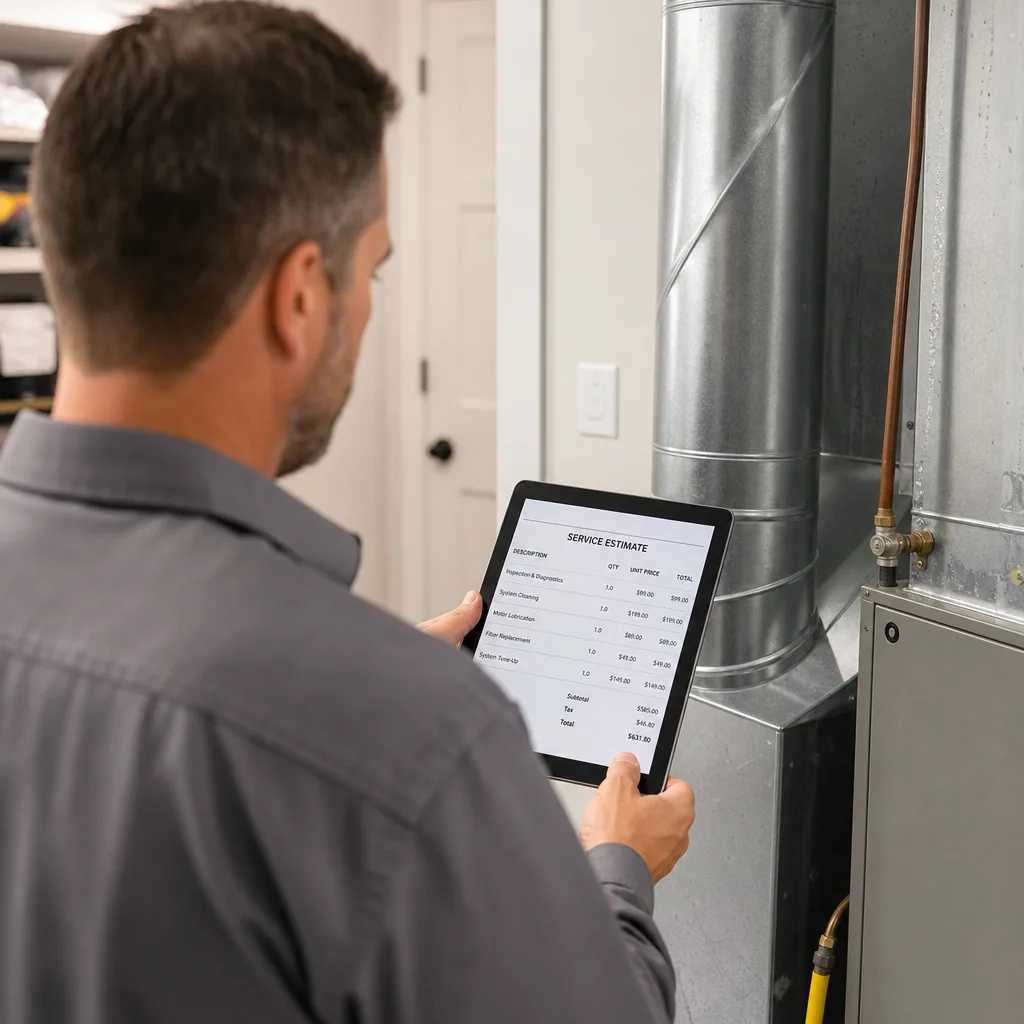
There is no single answer to whether Aeroseal is better than manual mastic duct sealing. It depends on how your home was built and where your ducts are located. If you have a single-story home with a wide-open attic and fully exposed ductwork, a skilled technician can do an excellent job using manual mastic paste.
However, if you have a multi-story home, a finished basement, or duct runs buried between floors, manual sealing is physically impossible without cutting holes in your drywall. In these situations, Aeroseal is the superior option because the aerosol mist travels through the entire length of the system automatically.
Duct Sealing Pros and Cons
To help you weigh your options, consider these practical pros and cons of each method:
- Manual Mastic Sealing Pros: Highly cost-effective for exposed ducts, excellent for closing large gaps and disconnected joints, and requires no specialized computer equipment.
- Manual Mastic Sealing Cons: Cannot reach hidden ducts behind walls, highly labor-intensive, and relies heavily on the technician’s ability to spot every leak visually.
- Aeroseal Pros: Can reach hidden leaks and often achieves substantially higher leakage reduction than manual sealing alone,[3][11] provides a computer-printed certificate showing the exact before-and-after leakage reduction, and requires less manual labor time.
- Aeroseal Cons: Higher upfront equipment cost, and cannot seal very large disconnected gaps (holes larger than 5/8 of an inch must still be patched manually first).
For most homes, a hybrid approach works best. A technician manually seals the large, visible gaps near the main HVAC unit (the plenums) and then uses Aeroseal to seal the hundreds of tiny, hidden cracks throughout the rest of the branch lines.
What Does Aeroseal vs Manual Duct Sealing Cost?
Need aeroseal vs manual duct sealing?
We’re available now — call for a fast, free estimate.
When comparing the cost of these two methods, it is important to look at both the upfront price and the long-term return on investment (ROI). Because Aeroseal requires specialized diagnostic equipment and certified training, it carries a higher initial price tag than basic manual sealing.
At Premier Air Duct Solutions Woodland Hills, we estimate that professional duct sealing projects in our local area generally range from $1,000 to $3,000.
- Manual Sealing Cost: Premier Air Duct Solutions estimates this typically ranges from $1,000 to $2,000. The cost is almost entirely driven by manual labor. If your attic is difficult to crawl through, labor costs can rise quickly.
- Aeroseal Sealing Cost: Premier Air Duct Solutions estimates this typically ranges from $1,800 to $3,500. While the equipment fee is higher, the labor time is significantly lower.
According to NREL data comparing the two installation methods, manual duct sealing took an average of 147 minutes of active labor, compared to just 98 minutes of equipment operation time for the aerosol method. By choosing an automated process, homeowners typically experience less technician labor time on-site.[5]
Additionally, NREL economic analyses of residential energy efficiency measures showed that combining aerosol sealing with manual pre-sealing offered a strong savings-to-investment ratio (SIR) and a faster payback period than manual sealing alone on complex duct systems, thanks to the more thorough seal achieved.[3]
Understanding Your HVAC Components: From Flex Duct to Blower
To get the most out of any duct sealing project, it helps to understand how air flows through your home. Your heating and cooling system relies on a balance of supply ducts (which push conditioned air into your rooms) and return ducts (which pull air back to the system to be filtered and conditioned again).
If your return ducts have leaks in an unconditioned attic, they will suck in dusty, hot attic air and blow it directly into your living spaces. This is especially problematic in Woodland Hills, where the dry climate, seasonal pollen, and dust carried by the Santa Ana winds can quickly settle in attic spaces. Leaky return ducts act like a vacuum cleaner, pulling those allergens directly into your breathing air.
Similarly, if your flexible supply ducts (often called flex ducts) have tears or loose connections, your expensive air conditioning escapes into your attic instead of cooling your home. This forces your blower motor to work harder and run longer, driving up your energy bills and wearing out your HVAC system prematurely. Whether you choose manual mastic or Aeroseal, sealing these leaks restores balanced air pressure, keeps attic dust out of your home, and reduces wear and tear on your equipment.
Frequently Asked Questions About Duct Sealing
What is the difference between Aeroseal and manual duct sealing?
Manual sealing uses a paintbrush to apply a thick mastic paste or foil tape to the outside of visible duct joints. Aeroseal uses a specialized machine to inject a pressurized, non-toxic aerosol mist inside the duct system, sealing hidden cracks and leaks from the inside out.
Is Aeroseal better than manual mastic duct sealing?
Aeroseal is better for sealing hidden ductwork inside walls, ceilings, and tight attics. Manual mastic is highly effective and more affordable for visible, easily accessible ducts, such as those in an open garage or unfinished basement. A combination of both methods usually provides the best overall results.
How much does Aeroseal duct sealing cost compared to manual sealing?
According to estimates from Premier Air Duct Solutions Woodland Hills, manual duct sealing usually costs between $1,000 and $2,000, depending on how hard it is to access your ducts. Aeroseal duct sealing typically costs between $1,800 and $3,500 because it requires specialized computer diagnostic equipment and aerosol sealants. However, studies show Aeroseal can reduce leakage more than manual sealing and may improve energy performance.[3][11]
How long does Aeroseal duct sealing last?
The Aeroseal adhesive formula is highly durable. While traditional manual duct tapes and low-grade mastics can dry out, crack, or lose adhesion over time due to extreme attic temperature swings, Aeroseal is designed to provide a long-lasting seal.
Can I do manual duct sealing myself or do I need a professional?
You can perform manual duct sealing yourself on visible, easily reachable ducts in your attic or garage using mastic paste and a brush (avoid using standard utility duct tape, which degrades quickly). However, you will need a professional for Aeroseal or to diagnose hidden leaks behind walls, as these require specialized diagnostic blower fans and computerized pressure sensors.
Is Aeroseal safe for home air quality?
Yes, Aeroseal is reported as water-based and non-toxic in manufacturer materials.[13] The sealant formula uses similar vinyl-based polymers found in common household items like chewing gum and hairspray. It does not emit harmful VOCs (volatile organic compounds) and only sticks to the edges of the leaks, not the flat interior walls of your ducts.
Does duct sealing really save money on energy bills?
Yes. Studies show Aeroseal can reduce leakage more than manual sealing and may improve energy performance.[3][11] By sealing these holes, your HVAC system does not have to run as long to maintain your desired indoor temperature, leading to noticeable savings on your monthly heating and cooling bills.
Need aeroseal vs manual duct sealing?
We’re available now — call for a fast, free estimate.
Sources
- [PDF] Aerosol-Based Sealant for Air Ducts Technology – Publications | NLR – docs.nlr.gov (2014)
- [PDF] Aerosol-Based Sealant for Air Ducts Technology – Publications – docs.nrel.gov (2014)
- [PDF] Evolving Applications of Aerosol Sealant – OSTI – osti.gov (2011)
- [PDF] Field Test of Advanced Duct-Sealing Technologies within the … – huduser.gov
- Field Test of Aerosol-Spray and Best-Practice Duct-Sealing Approaches – aceee.org
Related reading: Air Duct Repair Services Woodland Hills | Call Now-10% Off | On-Site in 60 Minutes | Free Estimate
Related reading: Air Duct Cleaning Woodland Hills CA – Breathe Cleaner Air Today
Related reading: How to Fix Duct Repair and Sealing in Woodland Hills
Frequently Asked Questions
How do I determine if my home needs manual sealing, Aeroseal, or a hybrid of both?
A diagnostic pressure test is the only way to pinpoint exactly where your system is losing air and which method is required. Premier Air Duct Solutions Woodland Hills can perform a comprehensive duct inspection to measure your leakage rate and recommend the most cost-effective strategy for your layout. Schedule your inspection today to receive a free, upfront estimate on the ideal sealing method for your home.
What actually happens during a professional duct inspection before the sealing process begins?
Our technicians use specialized pressure-testing fans to measure total system leakage and physically inspect all visible runs for disconnected joints or torn flex ducts. Premier Air Duct Solutions Woodland Hills evaluates your entire HVAC layout to determine if manual mastic, Aeroseal, or a hybrid approach is required. Homeowners can easily schedule this professional duct inspection with us to receive a free, upfront estimate for all recommended sealing services.
Do I need to clean my air ducts before undergoing an Aeroseal or manual duct sealing service?
Yes, removing heavy dust and debris beforehand ensures the mastic or aerosol adhesive adheres perfectly to the duct surfaces. Premier Air Duct Solutions Woodland Hills can evaluate your system's cleanliness during our initial assessment to see if a combined cleaning and sealing service is necessary. Contact us to schedule a professional duct inspection and get a free, upfront estimate for your complete system optimization.
About the author
 |
Sarah Jenkins Sarah Jenkins is a certified indoor air quality specialist and content writer with over seven years of experience in the HVAC industry. She holds a B.S. in Environmental Science from California State University, Northridge, giving her a strong foundation in understanding residential and commercial air systems. Sarah is passionate about educating Woodland Hills property owners on the importance of professional duct care for creating healthier, more efficient spaces. |
Dusty vents or weak airflow at home?
We’re available now — call for a fast, free estimate.
Get Started