
Quick Summary
Unsealed ventilation systems can lose up to 30 percent of treated air and pull attic contaminants into living spaces, making professional duct sealing essential for lowering utility costs and improving indoor air quality. Premier Air Duct Solutions Woodland Hills eliminates conditioned air loss and balances room temperatures through precision manual mastic and computerized Aeroseal duct sealing backed by an ironclad workmanship warranty. After reviewing diagnostic indicators, repair methods, and project costs, homeowners can schedule a free duct sealing inspection and upfront estimate to optimize their HVAC system.
Duct Sealing: How to Cut Energy Bills and Clean Indoor Air
If your home struggles to maintain comfortable temperatures during a summer heatwave or collects fine dust within days of cleaning, your ductwork is likely working against you. According to ENERGY STAR data, the average home loses 20 to 30 percent of conditioned air through holes, poor connections, and unsealed joints in the ventilation system. In places like Woodland Hills and the broader San Fernando Valley, where summer attic temperatures routinely top 140 degrees, those gaps do more than waste energy. They pull unconditioned attic air directly into your living spaces.[2]
Professional duct sealing from specialists like Premier Air Duct Solutions Woodland Hills closes those hidden openings using mastic, reinforced tape, or specialized aerosol sealants. Sealing the distribution network stops conditioned air from escaping, reduces mechanical strain on your HVAC equipment, and can help reduce the entry and circulation of dust and pollutants through your home.
Quick Answer
What is duct sealing? Duct sealing is the mechanical process of finding and closing leaks across heating and cooling ductwork using mastic paste, heat-rated foil tape, or injected aerosol polymers. Sealing these gaps stops treated air from escaping into attics or crawlspaces, balances room-to-room temperatures, cuts monthly electric bills, and can help reduce the entry and circulation of dust and pollutants.
What Are the Signs of Leaky or Damaged Air Ducts?
Duct leaks hide behind drywall, under subfloors, and across attic crawlspaces, making them difficult to spot without specialized diagnostic tools. However, several clear performance warning signs indicate when a ventilation system needs attention.
Attic Negative-Pressure Infiltration
Duct leakage affects air quality, especially in regions subject to intense heat and seasonal winds. Your HVAC system works on a balanced pressure loop. When return air ducts crack, separate, or pull away from plenums in the attic, the blower fan creates strong negative pressure inside the return line.
Instead of drawing air only from your living spaces, the return system can pull in unconditioned attic air containing dust and pollutants. When leaks occur downstream of or around filter housings, standard consumer air filters may not prevent this air from entering the home. Professional air duct repair, as performed by Premier Air Duct Solutions Woodland Hills, seals these breach points, restoring proper pressure balance and helping to reduce the entry and circulation of dust and pollutants.
HVAC Symptoms: Weak Airflow, Hot Spots, and Rising Energy Costs
When air escapes before reaching its intended destination, the entire heating and cooling system loses capacity. Common household symptoms include:
- Stubborn hot and cold spots: Rooms located farthest from the central air handler receive weak airflow and stay uncomfortable regardless of thermostat adjustments.
- Rapid dust accumulation: A thin layer of fine grey dust quickly settles on furniture and baseboards shortly after routine cleaning.
- Elevated electricity bills: ENERGY STAR reports that leaky duct systems force compressors and blowers to run longer cycles, reducing overall operating efficiency by up to 20 percent.
- Airflow noise: High-pressure air escaping through cracked joints near the supply plenum produces noticeable whistling, hissing, or popping sounds inside walls.
The U.S. Department of Energy Building America program notes that systematic duct sealing substantially reduces overall system airflow leakage. Repairing separated flex runs and sealing register boots stabilizes delivery pressures and evens out temperatures throughout the property.[4]
How Does Aeroseal Duct Sealing Compare to Traditional Manual Sealing?
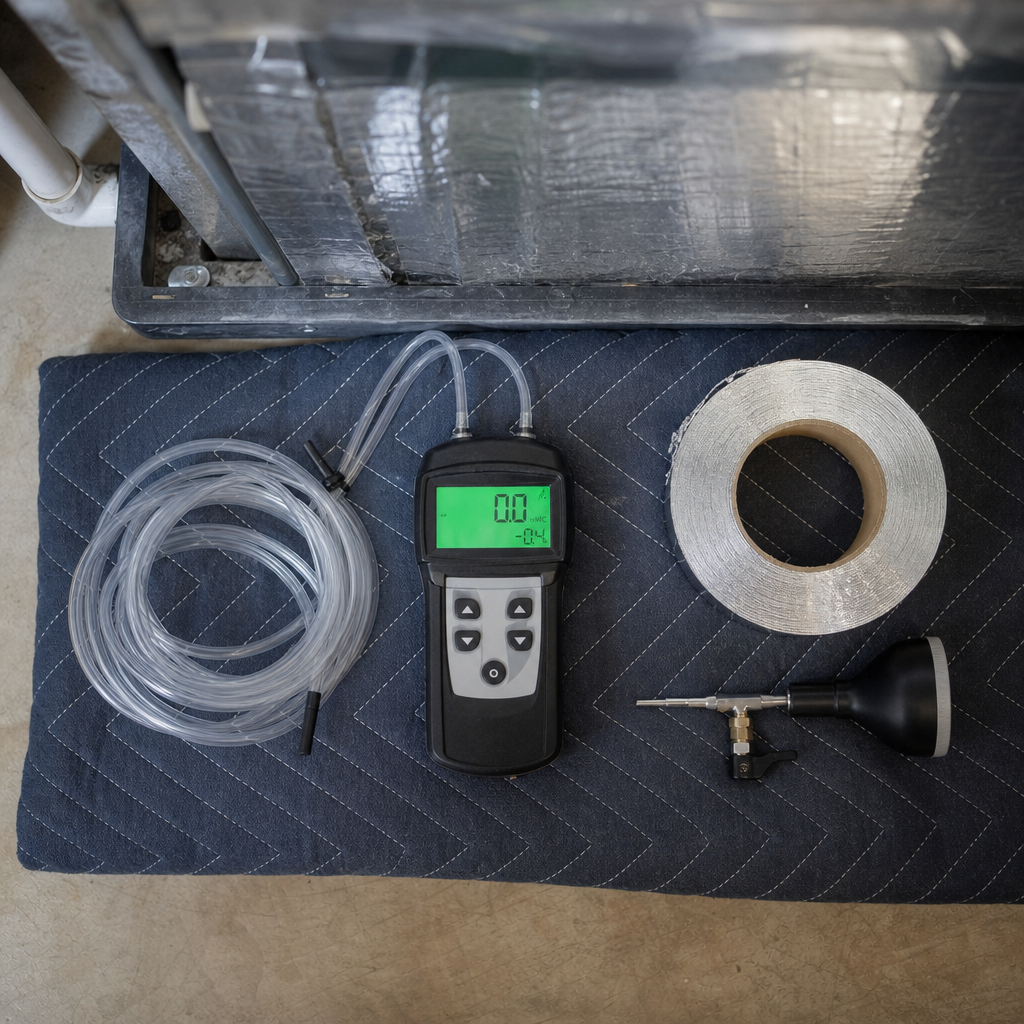
Manual duct sealing uses hand-applied mastic paste on accessible joints, while Aeroseal uses a computerized machine to inject suspended polymer particles that seal leaks from the inside out. Both methods have distinct advantages depending on your duct layout and accessibility.
Manual Mastic and Foil Tape Application
According to Premier Air Duct Solutions Woodland Hills, manual sealing works best for accessible ductwork located in open attics, basements, or mechanical closets. Technicians complete this process by:
- Cleaning surface dust, oils, and failed tape from sheet metal connections, collars, and register boots.
- Applying fiberglass mesh tape over gaps, mechanical seams, and joints.
- Spreading a thick coat of elastomeric mastic paste over the mesh, which cures into a flexible, airtight barrier intended to provide long-term sealing performance.
Manual sealing is dependable and budget-friendly for exposed runs, but it cannot fix leaks hidden inside finished walls, ceiling chases, or between floor joists without removing drywall.
Computerized Aeroseal Particle Injection
Aeroseal addresses concealed ductwork without opening walls. Technicians temporarily block off all supply and return registers, pressurize the system, and introduce an airborne mist of non-toxic polymer sealant. As pressurized air escapes through cracks, the microscopic particles stick to the edges of the leak, building a seal on openings up to 5/8 of an inch wide.
Certain field studies have found that aerosol retrofits can achieve large duct leakage reductions and reduce heating and cooling energy use by about 20 percent in specific cases. Studies from the Department of Energy and Lawrence Berkeley National Laboratory indicate that duct sealing can lower average heating and cooling energy waste by about 15 percent while reducing peak electrical demand during hot summer afternoons.[1]
Performance and Durability Comparison
| Feature | Manual Mastic Sealing | Aeroseal Injection | Standard Duct Tape |
|---|---|---|---|
| Leak Reach | Exposed, accessible ducts only | Both hidden and exposed duct runs | Accessible joints only |
| Drywall Impact | May require cuts for hidden runs | No drywall cuts required | May require cuts for hidden runs |
| Verification | Visual inspection | Live computer pressure diagnostics | Visual inspection |
| Expected Lifespan | Intended for long-term sealing performance | Intended for long-term sealing performance | Prone to premature failure and degradation |
What Does Professional Duct Sealing Cost?
Most residential duct sealing projects cost between $500 and $4,000, though costs vary widely by home and method. The exact price depends on home size, the number of HVAC zones, accessibility of the ductwork, and the method chosen for the repair.
Cost Factors
A smaller, single-story home with an accessible attic where technicians can apply manual mastic will typically sit at the lower end of the price spectrum. Larger multi-story homes, properties with finished ceilings, or systems requiring computerized aerosol sealing fall toward the middle and upper ends of the range. Diagnostic pressure testing, known as a duct blaster test, is often included by technicians at Premier Air Duct Solutions Woodland Hills to measure baseline leakage and confirm final results.
Energy Savings and Payback
According to Lawrence Berkeley National Laboratory, sealing ductwork can lower peak residential electricity demand by up to 25 percent. Oak Ridge National Laboratory field studies noted that whole-home duct retrofits consistently deliver noticeable returns, reducing annual heating and cooling costs by up to 18.5 percent.[5]
Because sealed ducts allow your air conditioner to cool the house faster without fighting unconditioned attic heat, the system runs shorter cycles. Over time, the lower utility bills, combined with reduced wear on expensive compressors and blower motors, allow the service to pay for itself.
Frequently Asked Questions
How much does professional air duct sealing cost?
Professional duct sealing generally costs between $500 and $4,000, with prices varying widely depending on the size of the home, how easy the ducts are to reach, and whether technicians use manual mastic or aerosol injection. Department of Energy data shows that residential sealing projects can reduce leakage from 30 percent down to single digits, lowering monthly power bills immediately.[3]
Is duct sealing worth the investment for home energy savings?
Yes. ENERGY STAR confirms that sealing and insulating ductwork is one of the most effective ways to lower utility costs. By stopping conditioned air from dumping into unconditioned attics or floor spaces, your HVAC unit uses significantly less power to maintain your desired indoor temperature.
Can duct sealing help reduce indoor air pollutants?
Yes. When return duct runs have holes or loose fittings, negative pressure can draw attic air into your ventilation stream. Sealing these gaps can help reduce the entry and circulation of dust and pollutants throughout your home.
How long does professional air duct sealing last?
Professional mastic paste and Aeroseal polymer applications are intended to provide long-term sealing performance. Unlike standard utility tape, which can dry out, crack, and fail due to attic temperature swings, professional sealing materials used by Premier Air Duct Solutions Woodland Hills are designed to maintain their seal over time.
Sources
- [PDF] duct sealing – Energy Star – energystar.gov (2009)
- PDF Remote Duct Sealing in Residential and Commercial Buildings: Saving … – energy.gov (2005)
- Measure Guideline: Sealing and Insulating of Ducts in … – www1.eere.energy.gov (2011)
- Duct Sealing – energystar.gov
- Remote Duct Sealing in Residential and Commercial … – energy.gov
Frequently Asked Questions
How do I know whether manual mastic or Aeroseal duct sealing is right for my home?
Manual mastic is ideal and cost-effective for accessible ductwork in attics or mechanical closets, whereas computerized Aeroseal seals hidden runs inside finished walls without drywall damage. Premier Air Duct Solutions Woodland Hills assesses your system layout during an on-site evaluation to determine the most effective approach for your property.
How is duct leakage measured before and after the sealing process?
Technicians use a diagnostic duct blaster test to pressurize the ventilation system and calculate exact baseline air loss before sealing begins. Premier Air Duct Solutions Woodland Hills utilizes computerized pressure testing to verify airtight results, backing every project with an ironclad workmanship warranty.
How can I get an accurate price estimate for duct sealing in Woodland Hills?
Because project costs vary based on duct accessibility, home size, and the sealing method required, a professional evaluation is essential. Homeowners can contact Premier Air Duct Solutions Woodland Hills to schedule a free duct sealing inspection and upfront estimate to identify energy leaks and confirm exact pricing.
About the author
 |
Emily Carter Emily Carter is a certified HVAC technician with over 8 years of experience in residential and commercial duct systems. Specializing in duct sealing and repair, she helps property owners improve energy efficiency and indoor air quality. Emily holds an Associate of Applied Science in HVAC Technology from Los Angeles Trade-Technical College. |
Dusty vents or weak airflow at home?
We’re available now — call for a fast, free estimate.
Get Started