
Quick Summary
Extreme attic temperatures routinely damage residential ductwork in Chatsworth, leading to inflated HVAC energy bills and contaminated indoor air. Premier Air Duct Solutions Woodland Hills restores system efficiency and stops attic dust intrusion by repairing damaged runs with long-lasting fiber-reinforced mastic or aerosol sealants. Homeowners will understand local repair pricing and sealing techniques, allowing them to contact Premier Air Duct Solutions Woodland Hills for a professional duct inspection and upfront estimate.
Duct Repair Sealing in Chatsworth: How to Cut HVAC Bills
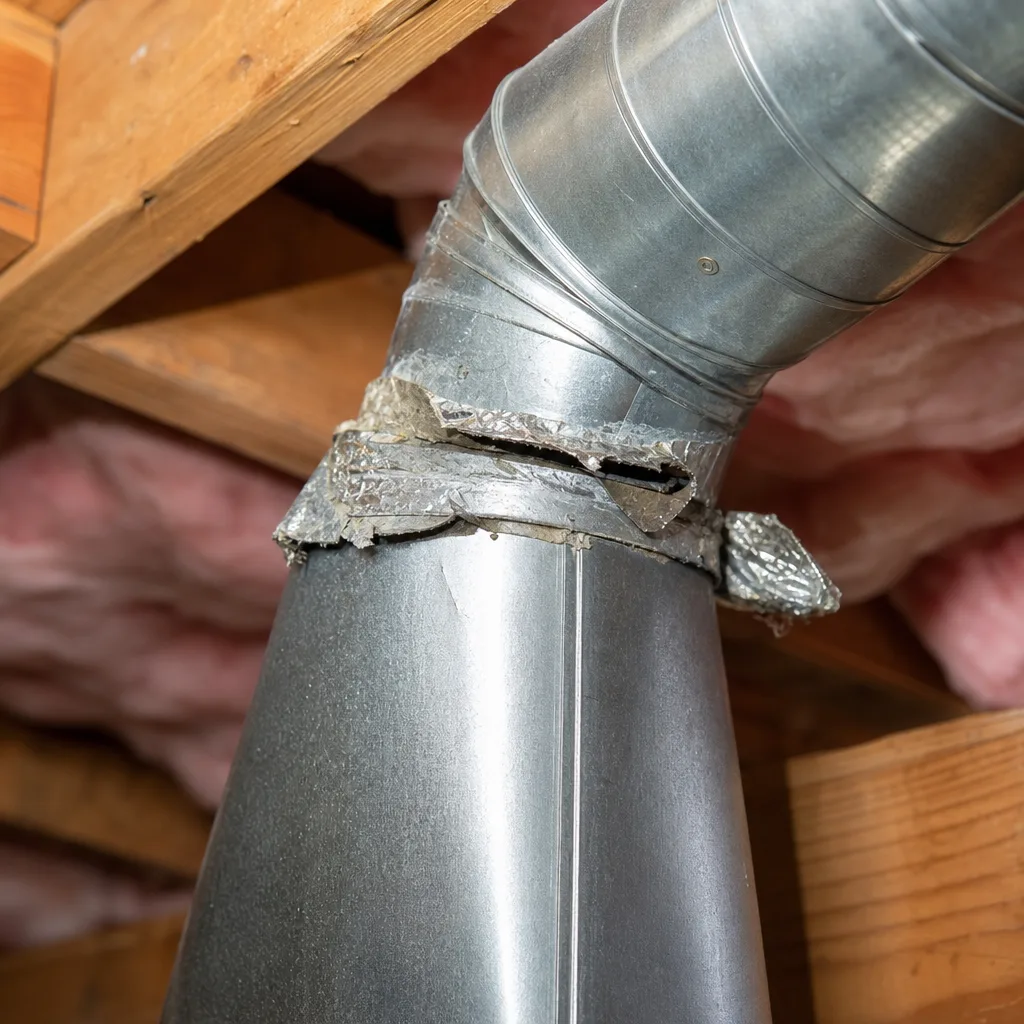
High summer temperatures routinely push unconditioned attic spaces to extreme heat. When flexible ductwork sits in that kind of heat for years, outer jackets crack, tape dries out, and seams pull apart. Leaking duct runs dump chilled air straight into the attic while forcing your air conditioner to run longer cycles. Professional duct repair and sealing from Premier Air Duct Solutions Woodland Hills stops this energy waste, restores proper airflow balance across every room, and helps lower monthly electric bills.[1]
Fixing duct leaks is not just about utility costs; it also protects your indoor air. When return ducts or ceiling boot junctions pull air from dusty attic cavities, your system circulates fine fiberglass particles and outdoor silt into the house. Applying long-lasting mastic paste or aerosolized sealant creates an airtight barrier that keeps conditioned air inside and attic dust out.
How Duct Sealing Lowers Energy Bills and Protects Air Quality
Duct repair and sealing targets the hidden disconnects, punctures, and separated joints throughout your heating and cooling distribution system. Rather than relying on standard cloth duct tape, which breaks down quickly under attic heat, technicians seal joints using fiber-reinforced mastic compound or internal aerosol sealant.
Studies by the Lawrence Berkeley National Laboratory show that reducing duct leakage by roughly 40% can cut overall HVAC energy use by around 10%. However, actual energy savings are not guaranteed and will vary significantly based on building type, duct location, and the initial leakage level of the home. Sealing unconditioned attic runs consistently provides noticeable relief on peak summer utility bills.[5]
In homes with unsealed ductwork, airborne dust and allergens create heavy indoor particulate loads. Sealing ductwork stops the negative pressure that sucks attic contaminants into living spaces, helping keep furniture clean and indoor air healthier for occupants.
What Does Duct Repair and Sealing Cost in Chatsworth?
Need duct repair sealing in Chatsworth?
We’re available now — call for a fast, free estimate.
Specific local pricing data for Chatsworth is not established in standard reference briefs, as costs vary widely depending on system size, configuration, duct condition, and attic or crawlspace accessibility. According to Premier Air Duct Solutions Woodland Hills, general industry estimates for basic sealing on an accessible, single-system home typically range between $250 and $600. For larger multi-system homes, heavily damaged flex ducting, or hard-to-reach spaces requiring internal aerosol sealing, estimated costs can range from $500 to $1,200 or more.[3]
According to study estimates from the U.S. Department of Energy, sealing ducts in unconditioned attics and crawlspaces can yield 15% to 20% in heating and cooling energy savings, which helps offset service costs over time. Actual savings depend heavily on building characteristics, duct location, and existing leakage levels.[2]
Estimated Service Price Ranges
| Service Type | Estimated Price Range |
|---|---|
| Single-System Inspection and Basic Mastic Sealing | $250 – $600 |
| Dryer Vent Cleaning and Inspection | $80 – $200 |
| Duct Sanitizing and Deodorizing Add-On | $70 – $150 |
| Whole-Home Duct Repair, Aeroseal, or Major Flex Replacement | $500 – $1,200+ |
Factors That Determine Your Final Estimate
Several factors shape the final price of duct repair:
- Accessibility: Open, walk-in attics require less labor than tight crawlspaces or multi-story chases.
- Duct Material: Sheet metal trunks needing hand-applied mastic take different labor than replacing deteriorated flex duct sections.
- Boot Junction Repairs: Sealing ceiling register boots to the drywall requires specialized attention around every vent in the home.
- Testing Requirements: Pre- and post-repair blower door or duct blaster pressure testing provides verifiable proof of leakage reduction.
Why Dust Returns After Cleaning Without Junction Sealing
A common complaint from homeowners is that dust levels increase only weeks after paying for an air duct cleaning. This issue happens when cleaning companies vacuum out the ducts but fail to seal the gaps between the sheet metal register boots and the drywall cutouts.
The Negative Pressure Attic Intrusion Effect
When your HVAC blower kicks on, air movement creates localized pressure differences. If your return plenums and register boots have unsealed gaps, the system generates negative pressure inside the ceiling cavity. This draws attic air (loaded with fine dust, pollen, and microscopic fiberglass insulation fibers) directly into the air stream and blows it into bedrooms and living areas.
Data from the American Council for an Energy-Efficient Economy (ACEEE) shows that residential duct leakage often averages close to 8% of total fan flow, with many systems failing standard tightness targets. Simply vacuuming a duct without closing those structural gaps leaves the pathway wide open for continuous attic contamination.[4]
Sealing Ceiling Boots and Return Plenums First
Long-term air quality improvements require physical sealing before or immediately alongside duct cleaning. Technicians at Premier Air Duct Solutions Woodland Hills inspect each register boot, seal the perimeter gaps against the ceiling drywall with fiber-embedded mastic paste, and secure the return plenum seams at the air handler. This ensures that the blower pulls air exclusively through your filtered return grilles.
Common Ductwork Failures in Residential Systems
Need duct repair sealing in Chatsworth?
We’re available now — call for a fast, free estimate.
Residential HVAC systems face elevated heat, temperature swings, and seasonal weather stress that degrade duct components over time. Technicians routinely encounter three main failure points during duct inspections:
1. Flexible Duct Deterioration and Tears
Older flexible ducting uses thin plastic outer jackets that turn brittle and flake away after repeated seasons in unconditioned attics. Once the outer layer fails, the fiberglass insulation sags, moisture builds up, and the inner core tears, venting conditioned air into unconditioned spaces.
2. Separated Supply and Return Plenum Joints
The main sheet metal boxes connected directly to your furnace or air handler experience constant vibration from the blower motor. Over time, poorly secured collars and tape joints loosen. A disconnected main plenum collar can dump a substantial portion of your conditioned air straight into the attic space.
3. Loose Register Boots
As houses settle and framing shifts with seasonal temperature changes, the metal boots that connect duct runs to ceiling vents pull away from the drywall. These unsealed gaps act as entry funnels for attic debris every time the system turns on.
Comparing Mastic Paste and Aerosol Duct Sealing
Both hand-applied mastic and internal aerosol sealing are proven methods to tighten leaky HVAC systems. The right choice depends on your home architecture and whether the duct runs are physically accessible.
| Feature | Fiber-Reinforced Mastic | Aerosol Injection Sealing (Aeroseal) | Standard Duct Tape |
|---|---|---|---|
| Best Application | Exposed attic plenums, boots, and open duct runs | Concealed ductwork inside walls and finished ceilings | Temporary holding only (not compliant with California Title 24 or DOE duct sealing standards) |
| Access Required | Direct physical crawlspace or attic access | Access to supply and return register openings | Direct physical access |
| Durability | Permanent, crack-resistant flexible bond | Permanent polymer seal on leaks up to 5/8 inch | Poor; dries and peels under high attic heat |
| Diagnostic Verification | Visual check and post-repair static pressure testing | Computerized live pressure and leakage tracking | None |
When Hand-Applied Mastic Works Best
For single-story homes with accessible attics, Premier Air Duct Solutions Woodland Hills notes that hand-applying mastic paste reinforced with fiberglass mesh is cost-effective and permanent. The paste remains slightly flexible when cured, allowing it to withstand duct expansion and contraction without cracking.
When Aerosol Sealing Is the Right Choice
In two-story homes or properties with ductwork enclosed inside finished ceilings, technicians cannot physically reach every joint. Aerosol sealing temporarily blocks all registers, pressurizes the system, and injects airborne sealant particles that find and seal hidden holes from the inside out.
Frequently Asked Questions
How do I know if my HVAC air ducts have leaks and need sealing?
Common warning signs include rooms that stay hotter or colder than the rest of the house, higher than expected seasonal electric bills, weak airflow from specific ceiling registers, and fine grey dust settling quickly on surfaces near supply vents.
How long does a professional air duct repair and sealing service take?
Service duration varies depending on system size, duct accessibility, the extent of damage, and the sealing method utilized. Simple single-system projects require less time, while multi-unit systems or full aerosol procedures can take up to a full working day.
Do HVAC technicians in Chatsworth offer both duct cleaning and sealing?
Yes. Many professional HVAC teams, including Premier Air Duct Solutions Woodland Hills, provide both services together. Sealing the register boots and plenums during a cleaning service prevents the vacuuming process from pulling fresh attic insulation into your duct runs.
What is the best method for sealing leaky air ducts (mastic vs. Aeroseal)?
Mastic is ideal and economical for exposed, accessible ductwork in attics and garages. Aerosol sealing is the best method for multi-story homes or finished drywall cavities where ducts cannot be reached by hand.
Can duct sealing improve indoor air quality and lower energy bills?
Yes. Sealing ductwork stops conditioned air from escaping into the attic, which reduces system run time and helps lower utility bills, though exact savings depend on building layout, duct location, and initial leakage levels. It also stops negative pressure from pulling attic dust, insulation fibers, and outdoor allergens into your living areas.
Need duct repair sealing in Chatsworth?
We’re available now — call for a fast, free estimate.
Sources
- [PDF] Field Test of Advanced Duct-Sealing Technologies within the … – weatherization.ornl.gov (2001)
- [PDF] Case Studies of Duct Retrofits and Guidelines for Attic and Crawl … – info.ornl.gov (2008)
- Duct Sealing – energystar.gov
- LBNL-42339 – digital.library.unt.edu
- Diagnostic Performance Assessment of 30 New California Homes – aceee.org
Duct Repair Sealing in Nearby Cities
We also serve the communities around Chatsworth:
- Duct Repair Sealing in Woodland Hills
- Duct Repair Sealing in Agoura
- Duct Repair Sealing in Calabasas
- Duct Repair Sealing in Canoga Park
- Duct Repair Sealing in Encino
- Duct Repair Sealing in North Hills
- Duct Repair Sealing in Northridge
- Duct Repair Sealing in Oak Park
Frequently Asked Questions
How often should ductwork in Chatsworth homes be inspected and resealed?
Due to intense attic heat that rapidly degrades flexible duct materials and adhesives, Chatsworth homeowners should have their duct systems inspected every 3 to 5 years. Premier Air Duct Solutions Woodland Hills provides comprehensive diagnostic checks to identify brittle flex jackets and separated seams before utility bills spike.
How do technicians verify that duct repair and sealing was successful?
Technicians perform pre- and post-repair pressure tests, such as duct blaster or computerized aerosol tracking, to measure precise reductions in airflow loss. Premier Air Duct Solutions Woodland Hills utilizes these diagnostic tools to give homeowners verifiable proof of their improved duct tightness.
Can professional duct sealing help my home meet California Title 24 energy standards?
Yes, sealing duct runs with fiber-reinforced mastic or Aeroseal brings residential systems into compliance with California Title 24 duct leakage limits, unlike standard cloth tape. Premier Air Duct Solutions Woodland Hills applies code-compliant sealing methods that maximize airflow efficiency and help homeowners qualify for local energy-saving incentives.
About the author
 |
Emily Carter Emily Carter is a certified HVAC technician with over 8 years of experience in residential and commercial duct systems. Specializing in duct sealing and repair, she helps property owners improve energy efficiency and indoor air quality. Emily holds an Associate of Applied Science in HVAC Technology from Los Angeles Trade-Technical College. |
Dusty vents or weak airflow at home?
We’re available now — call for a fast, free estimate.
Get Started